
Being a stylist means people tell you things, and at a certain point, whether it’s postpartum, menopause, stress, or just genetics catching up, hair loss becomes one of those things. I hear about it constantly.
My first instinct is always to go back to basics. Scalp massages actually do something; there’s real research behind the increased blood flow and what it does for follicle stimulation. Diet matters more than people think, especially protein and iron levels. Cutting back on heat, switching to a silk pillowcase, being gentler with wet hair. These things add up, and I always mention them first.
But sometimes that’s not enough, and people want more targeted help. That’s when the serum conversation starts, and lately, the two names coming up over and over (both from clients and online) are Divi and Zenagen. I’ve had enough people ask me what I think that it felt worth actually sitting down and comparing them properly.
So here’s what I found.
| Divi | Zenagen | |
| What it’s really focused on | Keeping the scalp hydrated and comfortable | Improving scalp health + supporting fuller hair over time |
| How it’s formulated | Lightweight, cosmetic-focused | Plant-based, salon-developed |
| How it feels | Light absorbs quickly, no buildup | Light, absorbs quickly, no buildup |
| What you’ll likely notice | A calmer, more balanced scalp | Less shedding, stronger hair, gradual fullness |
| Price point | ~$48 (1 oz) | ~$31 (1 oz) |
| Best fit for | Dry scalp, simple daily use | Thinning, shedding, long-term hair goals |
Why These Two Get Compared So Often
Both Divi and Zenagen fall into what I’d call the cosmetic scalp serum category, which means:
- They’re not medical treatments
- They’re not going to regrow hair in completely inactive follicles
- They’re designed to support the scalp and improve how your hair looks and feels over time
For clients dealing with early thinning, postpartum shedding, or stress-related changes, this is usually where I recommend starting. It’s non-invasive, and you don’t have to worry about contraindications the way you do with prescription treatments.
But even within this category, these two are doing pretty different things.
A Quick Reality Check on Hair Serums

I say this to every client who asks: serums are not miracle products.
They work best for:
- Early thinning and increased shedding
- Hormonal or stress-related hair changes
- Fine hair that’s losing density over time
They are not going to regrow hair in completely inactive areas, replace a medical treatment, or deliver fast dramatic results.
What they can do, when you’re actually consistent with them, is support your hair in a way that adds up over time.
Brand Approach and What Sets Them Apart
Divi: A Lightweight, Scalp Comfort Approach
Divi has gotten a lot of attention, especially in the clean beauty and influencer space, partly because its founder, Dani Austin, is a well-known Instagram creator who developed the product while dealing with her own hair thinning.
Their serum is centered around:
- Hydration
- Improving the appearance of hair density
- Scalp balance
- A lightweight, easy-to-use experience
Scalp hydration genuinely matters for healthy hair production, which is a big reason why the reviews tend to be positive, especially from people who are newer to scalp care and want something simple.
Zenagen: A Salon-Driven, Scalp-First Philosophy
Zenagen is a salon-grade brand, and its formulas are built around advanced botanical chemistry with a focus on scalp health as the foundation for better hair.
The ingredients are plant-based and selected specifically for their ability to support scalp circulation, soothe inflammation, and strengthen the follicle environment.
Rather than positioning itself as a quick-fix growth product, Zenagen focuses on:
- Reducing the appearance of shedding
- Supporting follicle function and strand strength
- Promoting a calm, healthy scalp over time
That long-game approach is something I personally appreciate, because in my experience, that’s where the most consistent improvements actually come from.
Side-by-Side Comparison
Ingredients + Formulation Philosophy
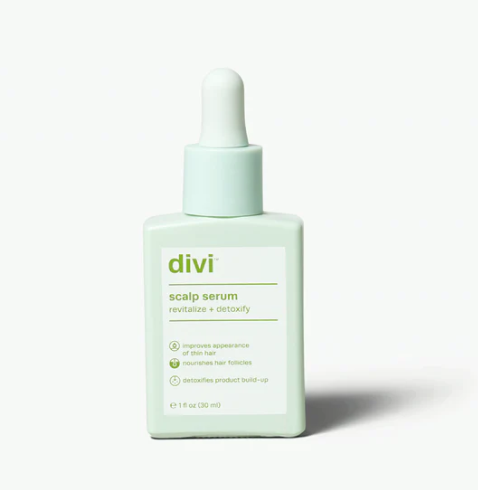
Divi leans on peptides and cosmetic actives that work on both the scalp and the strand. Its key ingredients include:
- Copper Tripeptide-1: a well-studied peptide shown to extend the growth phase of the hair cycle and support follicle size
- Acetyl Tetrapeptide-3: often paired with red clover extract under the trade name Capixyl, which has research behind it for reinforcing the scalp’s extracellular matrix and inhibiting the enzyme that produces DHT
- Caffeine for scalp circulation
- Tea tree oil, peppermint, eucalyptus, and menthol for that cooling sensation
- Biotin, hyaluronic acid, vitamin C, and a full amino acid blend for hydration and strand-level support
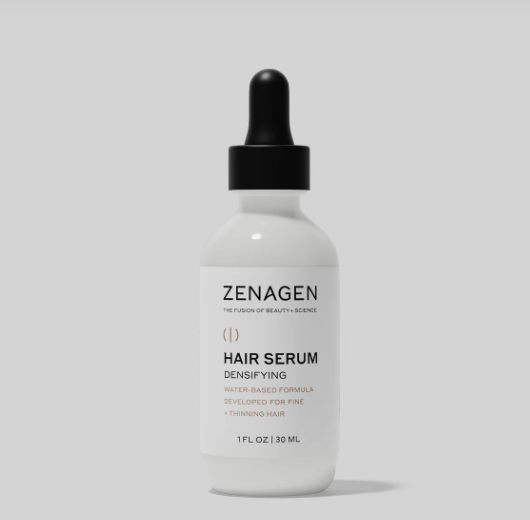
Zenagen takes a botanical, follicle-first approach built around what they call their Zen Restorative Complex, a blend of plant-based actives pulled through a cold-pressed CO2 extraction process they brand as Adaptipure. That process matters because most botanical ingredients lose potency during standard extraction, and cold-pressing preserves more of the active compounds.
Key ingredients include:
- Red clover for hair density and scalp balance
- Green and white tea as antioxidants for scalp health
- Saw palmetto for its studied role in blocking DHT
- Carrageenan extract, pea sprout, grape seed, and acai to neutralize free radicals and soothe inflammation
- Caffeine for circulation support
Basically, Divi is peptide-led with more emphasis on scalp sensation and hydration, and Zenagen is botanical and follicle-first with salon-grade extraction standards behind it.
Application + Consistency
Both are designed for daily use, which matters because no product works if you don’t actually stick with it.
- Divi is very lightweight with a refreshing feel on application and goes on quickly.
- Zenagen is also lightweight, absorbs easily, and doesn’t leave buildup.
Realistically, both are easy to use; the difference isn’t in application, it’s in what they’re doing after you put them on.
Scalp Feel + Experience
This is where Divi tends to stand out. It has a cooling, refreshing sensation that feels immediately soothing, especially for dry or irritated scalps. Zenagen is more neutral on application, lightweight, and comfortable, but without a noticeable tingle.
So if how your scalp feels right away is important to you, Divi will probably win. But if you’re more focused on what’s actually happening at the follicle level over time, that immediate sensation matters a lot less.
Results Timeline: What Can You Actually Expect?
I need to be clear here: neither of these products is going to give you overnight results.
- Divi tends to show scalp-level changes first, with fullness following around 3 months.
- Zenagen tends to lead with shedding reduction, then visible thickness and new growth over 3 to 6 months.
Both brands have published clinical data and verified user reviews, and the pattern is pretty consistent across both: scalp feel and shedding improve first, visible density takes longer.
Here’s how the timelines tend to break down.
Divi users typically report:
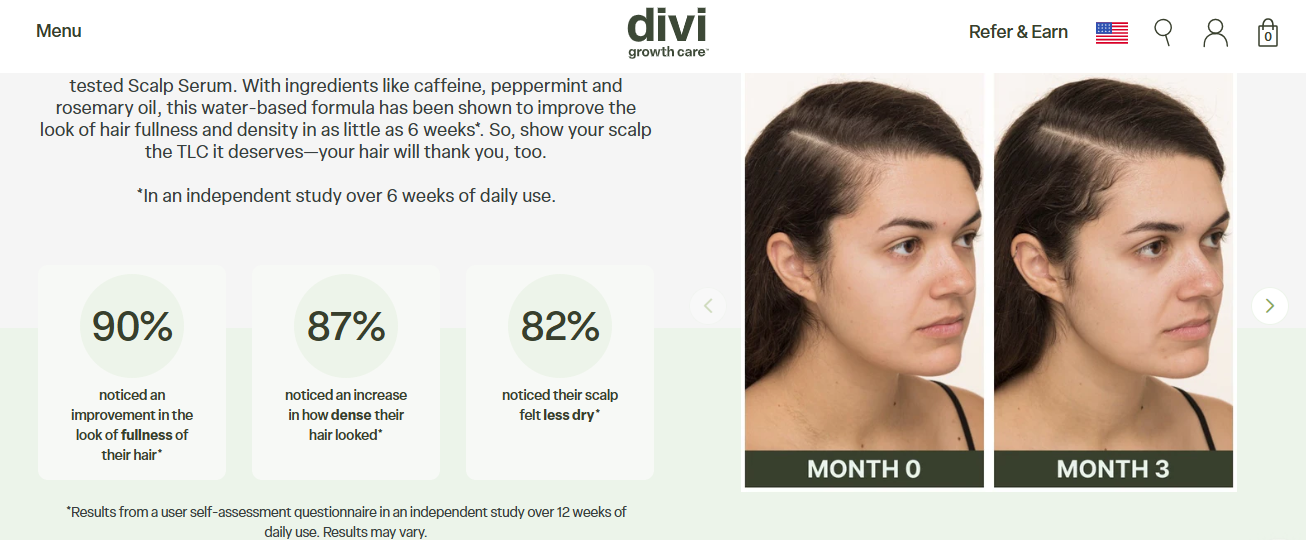
- Less shedding and scalp buildup within the first 2 to 3 weeks, with the scalp feeling cleaner and more hydrated early on.
- Visibly fuller hair and new baby hairs around the 3-month mark, with some reviewers noticing new growth after just a few uses.
- Best overall results with consistent daily use between 3 and 6 months.
That tracks with what I see, too. Scalp comfort tends to improve pretty quickly, density takes more time and patience.
Zenagen users typically report:
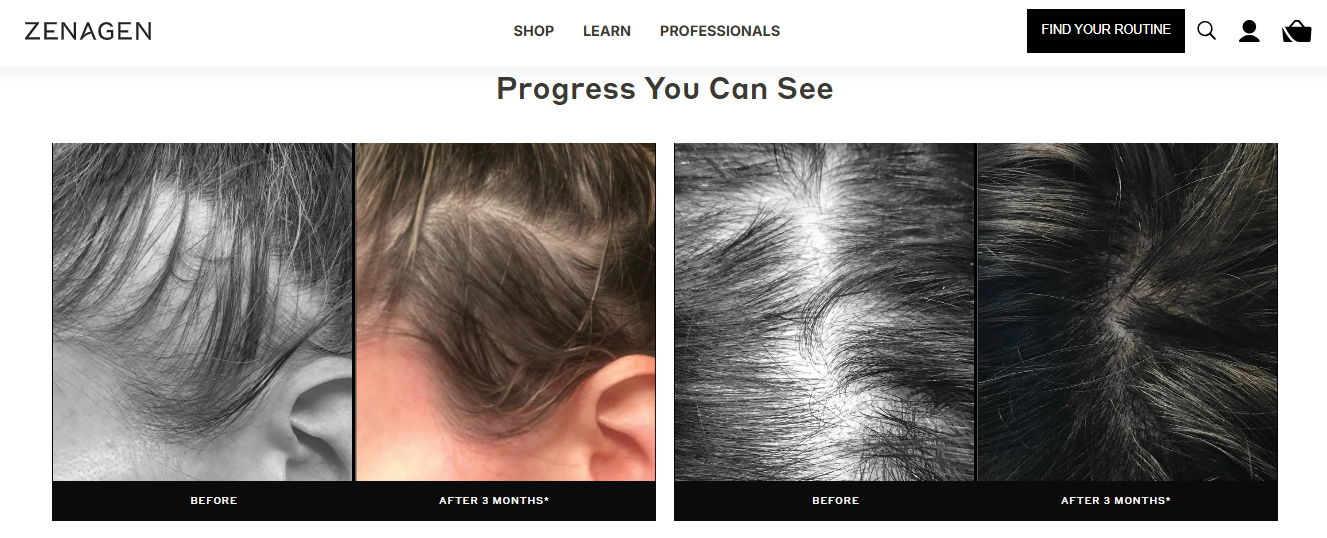
- Less shedding and reduced breakage within the first 4 to 8 weeks.
- Early changes in hair feel and thickness around the first month.
- New growth around the hairline, temples, and crown after about 3 months.
- Continued density improvements at 6 months and beyond.
Whichever one you try, give it at least 12 weeks before deciding if it’s working.
Price and Value of Divi vs Zenagen
Divi runs about $48 for one ounce, and Zenagen is around $31 for one ounce, so Zenagen is actually the more affordable option straight out of the gate.
But price per ounce only tells part of the story. It really comes down to what you’re trying to accomplish.
If your main focus is scalp hydration, immediate comfort, or just adding something lightweight into your existing routine, Divi makes sense. If you’re specifically trying to address shedding, support long-term density, or take a more targeted approach to scalp health, the value tends to lean toward Zenagen.
Both might be worth the investment if they’re solving the right problem for you.
Who Each One Is Best For

Choose Divi if:
- Your scalp feels dry, irritated, or out of balance
- You want something lightweight with an immediate refreshing feel
- Your focus is more on comfort and hydration than density
Choose Zenagen if:
- You’re noticing early thinning or increased shedding
- You want to take a long-term, follicle-focused approach
- You prefer plant-based, salon-grade formulas
- You care more about what’s happening at the scalp level than how it feels on application
Which Scalp Serum is Right for You?
Most people I talk to aren’t looking for anything extreme.
For example, the last client I spoke to about hair thinning is in her mid-50s and was looking for something she could add into her daily routine that wasn’t too intimidating or time-consuming.
And when you look at Divi and Zenagen side by side, they’re both trying to help in that direction, but again, they go about it differently.
When asked which product I recommend, I generally lean towards Zenagen because it’s an affordable salon-grade option, and in my experience, the long-term approach to scalp care that Zenagen provides is usually what makes the biggest difference.
Whichever route you go, I recommend sticking with it consistently.

- Postpartum Hair Treatments That Work - June 4, 2026
- Divi Scalp Serum vs. Zenagen Hair Growth Serum - May 14, 2026
- The Best Salon Software for Booth Renters - May 12, 2026