

Salon ownership just isn’t about escaping commission splits… What you’re really doing is trading a typical stylist’s workday for quarterly tax payments, creative marketing campaigns, and getting to truly control your salon’s vibe.
After 15 years as a licensed hairdresser and 10 years managing salon operations, I’ve watched some stylists make this leap successfully — and some crash spectacularly. That’s why I put together this guide on how to go from stylist to salon owner, including a step-by-step breakdown.
What You Need to Know First When Stepping Into Salon Ownership
Making the change from stylist to salon owner comes with a lot of unknowns. Here are the biggest ones that surprised me when I first took the leap.
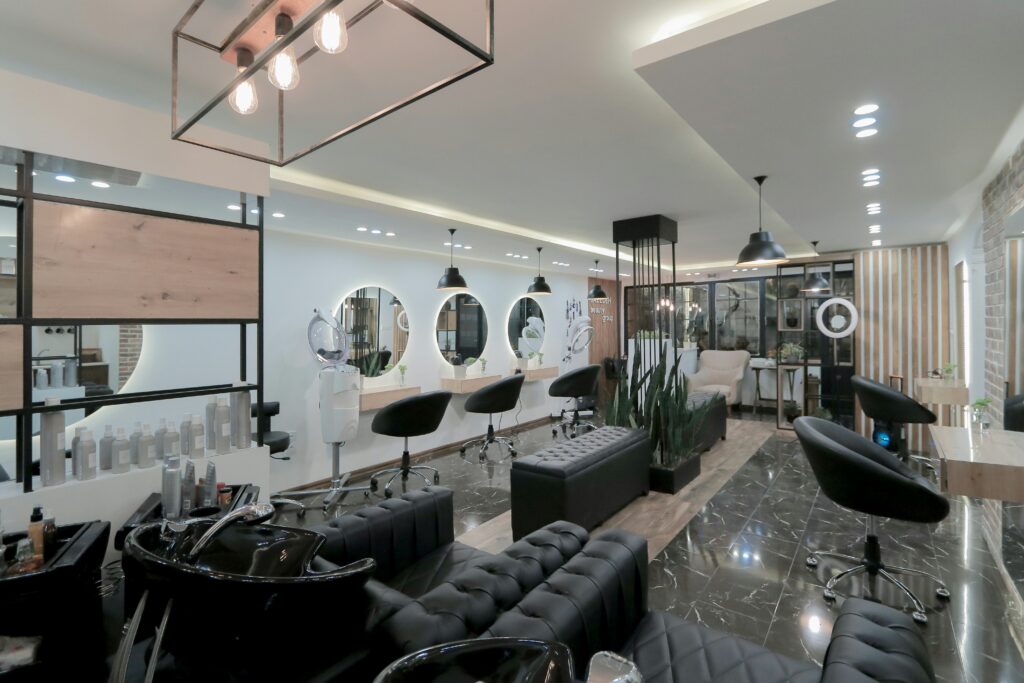
The Math Doesn’t Work How You’d Expect
Many stylists think that opening a salon means doubling their income: “I’ll earn 100% of my sales instead of 50% commission, plus booth rental fees or service revenue from other stylists!”
The only problem is that salons operate on 8–10% profit margins nationally, with top performers pushing 10–15% if they’re extremely well-managed. So for every $100 your salon generates, you’re taking home $8–$10 after expenses.
In multi-chair salons, 50–60% of sales go to employee costs, another 10–15% covers products, and 20–30% handles rent, utilities, insurance, and equipment maintenance. Compare that to the solo lifestyle, where 50–60% of sales go directly into your pocket because you’re both the employee and the owner.
The moment you hire even one other stylist, that entire chunk of revenue shifts from your take-home pay to their compensation. Suddenly, you’re paying for everyone’s product usage, everyone’s water consumption, and everyone’s electricity.
It’s easy not to think about that until you’re writing checks for your lease, a massive supply order, and utility bills all in the same week.
Your Time Stops Being Your Own
Salon ownership fundamentally changes what your workday looks like. I used to grab coffee on slow days, jog back if a walk-in bang trim came through, or take my time catching up with longtime clients.
As an owner, your time becomes your most precious resource because someone has to handle marketing, social media, compliance documentation, payroll, and 50 other operational details.
If you genuinely can’t stand letting go of that stylist flexibility, plan to hire a manager you trust completely — someone to drive operations as if they owned the place. Because someone has to do this work, whether it’s you or someone you’re paying.
Your Background Shapes Your Blind Spots
Coming from commission work means you understand team dynamics and what it’s like to be in the trenches on a slammed Saturday, when no one’s doing laundry and you’re running out of towels.
That empathy makes you a better manager.
But your blind spots will be the layers of licensing and insurance requirements — not just your cosmetology license, but liability coverage for yourself, your employees, the physical space, client services, MSDS documentation, and probably a dozen other policies you’ve never thought about.
Coming from booth rental means you already have a solid head for profits, expenses, and business bank account management. You won’t be overwhelmed by paying a lease while supplying products for multiple people. But your challenge will be building salon culture and team accountability.
You may have mastered business basics, but scaling to multi-chair operations introduces team dynamics, delegation challenges, and operational complexity you haven’t navigated before.
The Step-by-Step Path to Salon Ownership

1. Start with a Business Plan (Not Pinterest Boards)
I know making a business plan isn’t glamorous work, but skipping this step is how stylists end up $100,000 in debt before serving a single client.
A realistic plan should include:
- Equipment needs based on your salon type (lash bar, barbershop, full-service color salon)
- Organizational structure (managers, receptionists, stylists)
- Compensation structure (commission vs. booth rental)
- Optimization opportunities (vendor bulk discounts, payment processor comparisons, seasonal utility rate adjustments, insurance costs)
- Target market analysis
When working on market analysis, keep in mind that “better service” isn’t a differentiator. Every salon makes that claim, after all. What genuinely sets you apart from existing competition?
Don’t forget to set your budget — and then prepare for it to balloon 2–3x depending on your space and any surprises that may emerge in buildout.
2. Research Building Requirements
Building requirements vary wildly by location. In some regions, you may just need basic plumbing and health inspections. Others require stamped architectural drawings from licensed engineers, ADA compliance for every surface, and bringing decades-old spaces up to current building codes — all at your expense!
To find out what you’ll need, start with your state’s department of revenue (which should list all required licenses), SCORE, the SBA, or local Women’s Business Center if applicable. I’ve personally relied on SCORE mentors throughout my career, and they’ve always provided clarity when I felt overwhelmed.
Before signing any lease, ask about:
- What’s included in rent
- Any hidden fees
- Rent escalation schedule
- Landlord contributions to renovations
- Who pays for code/ADA compliance
- Security deposit terms
- Lease length and renewal options
- Exit clauses
- Personal guarantee requirements (avoid this if possible — it puts your personal assets at risk)
- Zoning (if the space isn’t zoned properly, you’ll have to deal with the expensive rezoning process)
- Who handles repairs
- Parking
- Other tenants
- After-hours access
If a landlord won’t compromise on reasonable requests, walk away — they’ll be a nightmare once you’re locked in.
3. Choose Your Salon Model
Commission salons typically pay stylists 40–60% of service totals. So if someone does $1,000 at 50% commission, they earn $500, and tips go to the stylist in full. You handle payroll, taxes, Social Security contributions, and potentially health insurance or 401(k) if you offer benefits. You get full control over branding, marketing, dress codes, and service protocols because your stylists are employees who are following your vision.
Booth rental operates like a landlord-tenant. Stylists rent space from you and keep 100% of service and retail revenue. What you include in rent is at your discretion — utilities, Wi-Fi, backbar products, etc. This works beautifully if you prefer hands-off management and don’t want tight brand control.
Hybrid models combine both, typically starting stylists on commission and transitioning them to booth rental once they build clientele. Alternatively, you could let them choose their structure. These models work extremely well when implemented thoughtfully, but they require software that handles both payment structures and detailed policy documentation.
How do you choose? Think about your ideal workday. If you want to feel more like a landlord collecting rent and setting basic guidelines, choose booth rental. If you have a strong brand vision with specific marketing, client experience standards, and team culture, then commission aligns better.
4. Navigate Buildout Without Going Broke
Buildout is where budgets die. Construction and utilities always cost more than expected: Salons use dramatically more water and electricity than offices, and bringing plumbing/electrical up to code is expensive.
There are also countless compliance requirements for a legal salon operation. If someone you know offers to do the buildout to “save money,” check your lease and insurance first, as unlicensed work may violate both! Even licensed friends should work under contract with proper insurance coverage, because things can (and do) go wrong.
Expect 3–6 months for buildout with inspection and permit delays. If possible, try to negotiate rent-free months during construction — you’re paying the lease while generating zero revenue otherwise.
5. Hire Your Team Strategically
Finding and managing employees is the single most difficult part of multi-chair salons. Not the finances, buildout delays, or inspections… the people. You’ll inevitably hire the occasional immature, defensive, or toxic stylist. Some can’t admit when they’re wrong, no matter how diplomatically you approach conversations.
I started managing with the belief that I could reach an understanding with anyone if we just talked. This just isn’t true. Some people will simply not fit your culture, and refusing to admit that is one of the biggest management problems that new owners face.
So, create culture intentionally and make it known. Figure out your salon’s brand identity, set up social accounts, and post consistently. Think about your target demographic’s preferences — Gen Z typically wants vivid colors and edgy cuts, while older clients want gray coverage and classic styles. You need stylists who specialize in what your clientele wants.
6. Pick Software That Won’t Force Expensive Migrations
The right software is one of the biggest shortcuts to successful salon management, so start exploring options during business planning because costs vary wildly and impact your monthly fixed expenses.
The nightmare scenario is picking a platform with an annual contract, realizing six months in that it can’t handle your booth rental payment routing or team scheduling, then paying for two platforms simultaneously while manually re-entering every client’s information into the new system — all the while retraining staff and setting up payment processing from scratch.
So, lock in your salon software choice once you finalize the payment structure and know the initial team size.
Choosing Salon Software That Scales With Your Growth
Once you’ve worked through the business plan, understood your local requirements, and identified your salon model, the software decision becomes critical. Think bigger than booking appointments — look for a platform that can handle team scheduling, payment routing, client retention, and marketing automation as you grow.
Vagaro
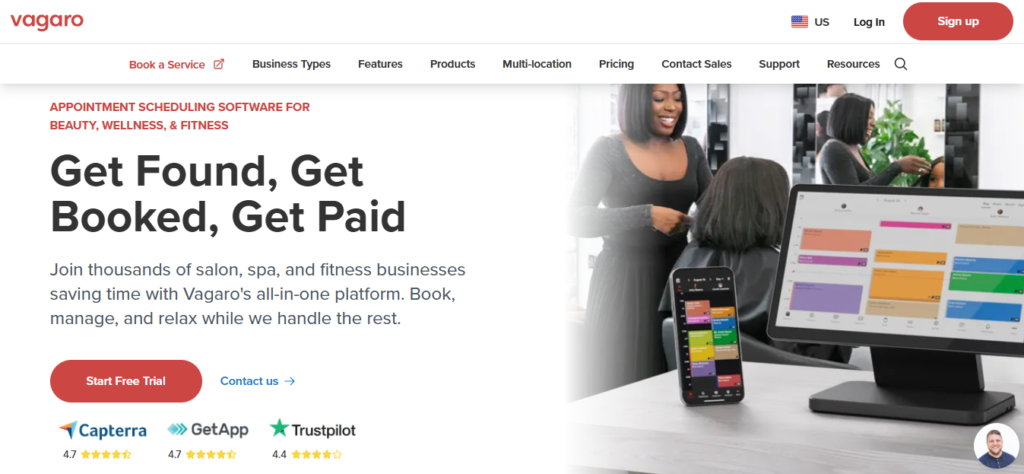
Vagaro starts at $23.99/month for one user and adds $10 per user until you cap at $83.99 for seven or more providers. That pricing works fabulously for 1–7+ chair salons needing functional scheduling, online booking, and basic marketing.
The included Vagaro marketplace can drive meaningful new business, but the challenge is converting first-time users into loyal clients rather than letting them bounce to another salon through the app next time.
The potential downsides are that customer support quality is inconsistent, the software can be buggy (especially around appointment payments), and add-ons stack up—forms cost $10/month, payroll is $34/month plus $5 per employee, and gift cards add $10/month.
Best for: 1-7 chair salons with tight budgets that can tolerate occasional issues for lower costs.
MangoMint

MangoMint’s Essentials tier starts at $165/month for 2-10 providers. It’s built for salons past the startup phase, but not yet ready for enterprise complexity. Their unique Express Booking feature makes booking appointments easier than ever, the calendar refresh is genuinely fast (critical when 15 stylists update schedules simultaneously), and automated reminders are unlimited with no per-message fees.
For booth rental salons, MangoMint’s individual payment routing eliminates the clunky multi-swipe experience where clients getting services from multiple stylists have to swipe three separate times.
The color-coded calendar makes multi-stylist days manageable, deposits integrate with the POS, and the waitlist automatically fills cancellations.
But there is a big gotcha to be aware of here: The add-ons with MangoMint stack fast. Two-way texting adds $75/month, digital forms add $50/month, and payroll is $50/month plus $8 per worker. If you need everything, that’s $165 base + $175 in add-ons + per-employee fees!
Best for: 10–20 stylist teams, booth rental models needing payment routing, and anyone who’s outgrown simpler systems.
Boulevard

Boulevard starts at $176/month (Essentials), $293/month (Premier), or $410/month (Prestige). It costs more upfront, but it eliminates the expensive and frustrating problem of switching platforms when your “affordable” option can’t handle your needs at scale.
Boulevard was purpose-built for salons, not adapted from fitness studios like many other appointment platforms today. For example, the front desk view shows who’s scheduled, who’s arrived, who’s late, and who’s checked out — a thoughtful design that obviously understands the actual workday of a stylist.
Its Precision Scheduling analyzes bookings, identifies openings, and suggests optimal appointment times automatically. My other favorite features are the online booking that embeds on my salon’s website (not a separate website), smart resource scheduling that prevents double-booking equipment, and the POS’s ability to handle booth rental payment routing.
Just note that there’s no free trial (demo only). And since the pricing is a bit on the higher side, 2-chair salons might want to stick with a smaller solution until they grow.
Best for: When you have 5+ providers, plans to expand to multi-location, or you’re exhausted by the idea of using multiple apps and want a platform that scales seamlessly.
Making the Leap to Salon Owner Successfully
As you continue this journey, keep three rules of thumb in mind:
- Understand your financial reality (8% profit margins, not 100% revenue)
- Build systems before obsessing over aesthetics
- Choose software that won’t make you miserable later
Whatever you do, don’t skip the business plan and jump straight to lease-signing and chair-shopping. Every successful salon owner I know started with research and spreadsheets, not Pinterest boards.
Even if it’s just a Google Doc listing your target market, startup costs, monthly expenses, and revenue projections, you’ll be ahead of 90% of aspiring salon owners.

- The Best Nail Salon Software Compared - March 29, 2026
- Best Scalp Serum for Hair Growth - March 12, 2026
- The 5 Best Fresha Alternatives for Salon and Spa Owners - March 11, 2026