
Hair thinning has a way of sneaking up on you. One day, your hair styles easily and feels full, and the next day you notice more strands in the shower drain, less density in your ponytail, or more scalp showing under bright light.
For many people, that realization brings the same question: What can I actually do about this?
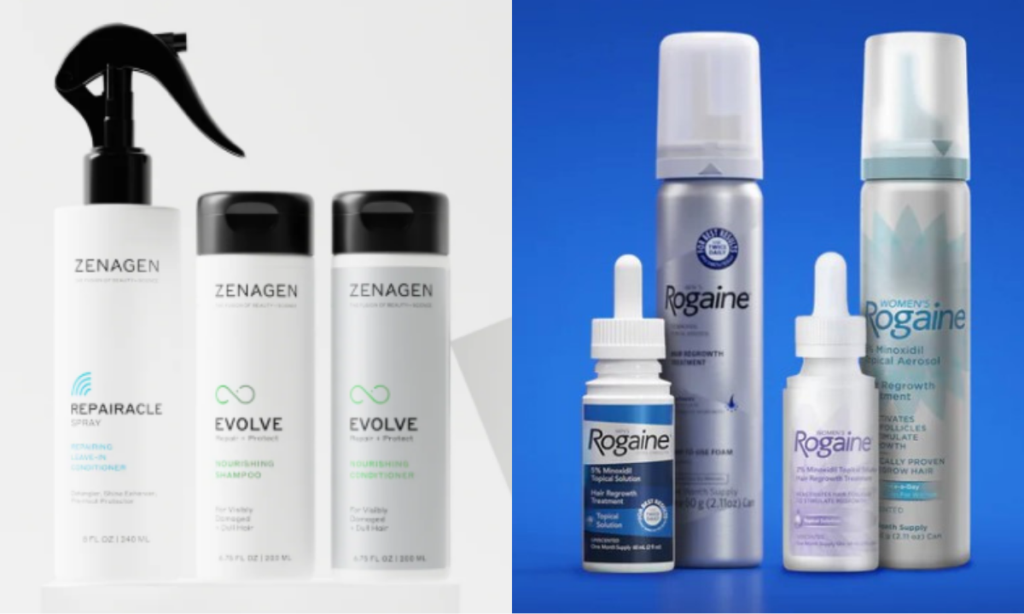
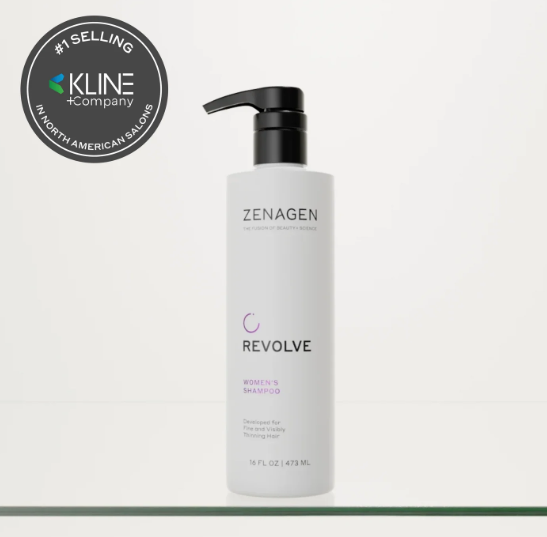
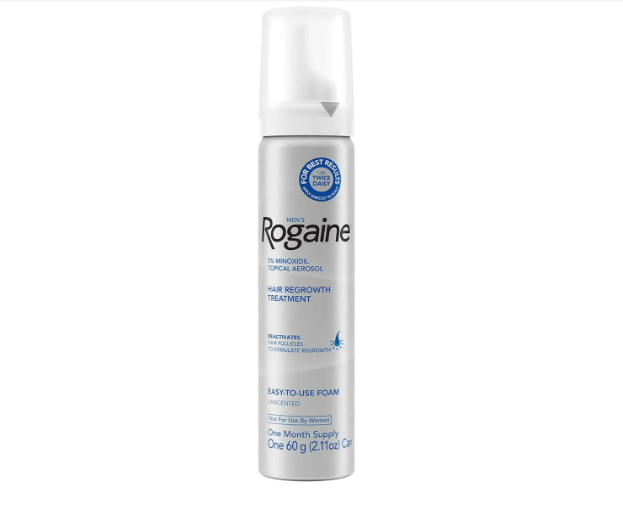
Because hair loss is so common, it’s no surprise that there are countless solutions on the market. Two of the most frequently asked about options by clients in my styling chair are Zenagen Revolve and Rogaine.
While both aim to address thinning hair and shedding, they work in very different ways. Zenagen focuses on creating a healthier scalp environment using botanical ingredients, while Rogaine uses an FDA-approved medication to stimulate regrowth.
If you’re trying to decide between the two, I hope this comparison will help you understand how they work, who they’re best for, and what you can realistically expect.
Understanding Hair Loss Before Choosing a Solution

Before jumping into the comparison, it’s important to understand that hair loss/thinning can happen for a number of reasons.
Common contributors include:
- Genetics or follicle shrinkage caused by overproduction of dihydrotestosterone (DHT)
- Stress (a classic problem we all face)
- Illness and overall health
- Inflammation and scalp health issues
- Poor circulation to follicles
- Nutritional deficiencies
- Product buildup and scalp imbalance
Why does this matter? Knowing what might be the contributor of your hair loss may help you better decide which solution works best for you. There is no “one size fits all” when it comes to hair loss, so the best approach really depends on your goals, comfort level, and the underlying cause of thinning.
Zenagen
Zenagen was founded by Jared Reynolds after he began experiencing hair loss himself and felt frustrated by the limited solutions available. Rather than focusing on pharmaceutical options, he developed formulas based on science and high-quality botanical ingredients. The brand’s philosophy centers on building a healthier scalp environment, because that’s where sustainable hair growth begins.
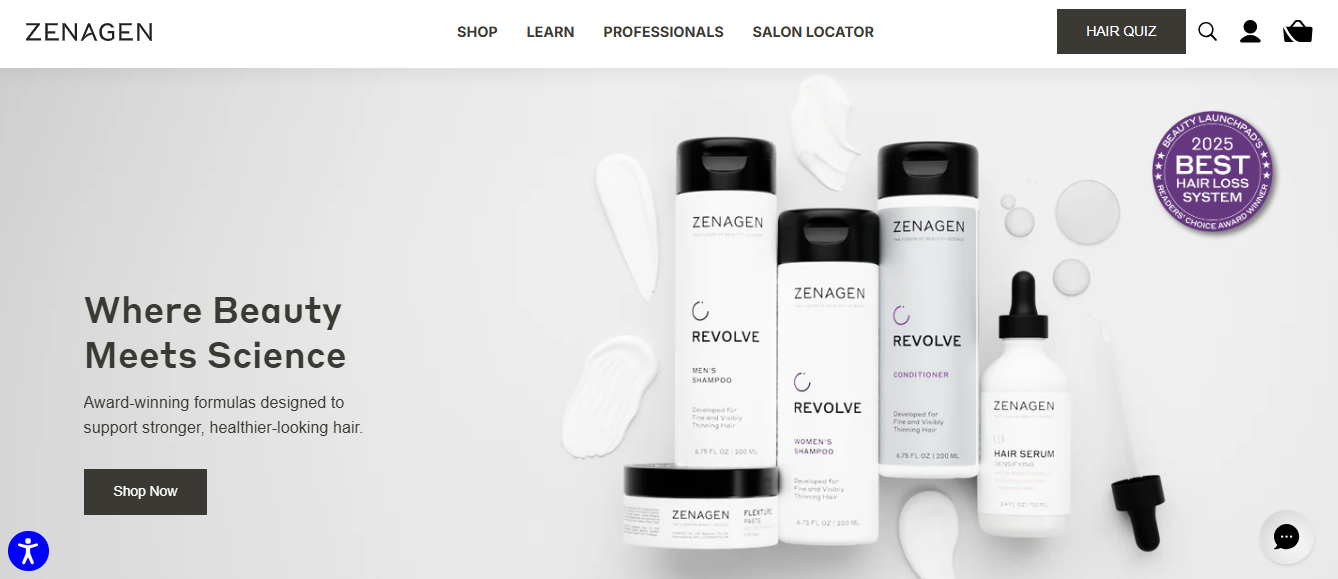
Zenagen products aim to:
- Reduce unnecessary shedding
- Support follicle strength
- Improve scalp health
- Improve strand quality
- Encourage healthier-looking hair
- Supply the scalp with essential nutrients
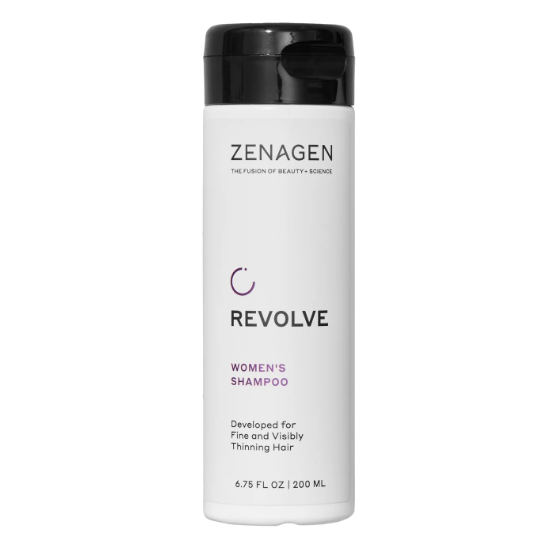
Zenagen: Revolve
“Revolve” is their product line designed to specifically address mild to moderate thinning, increased shedding, or reduced density. It is a shampoo and conditioner system made with natural ingredients and formulated with intention.
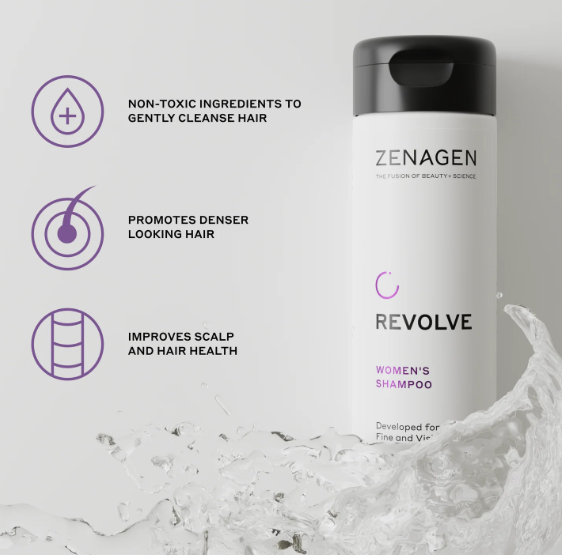
Key Botanical Ingredients
- Green tea extract – softens hair and reduces breakage
- Saw palmetto – reduces DHT overproduction
- Red clover – encourages scalp renewal
- Brahmi – promotes circulation and strengthens follicles
- Aloe leaf juice – lightweight hydration and soothes scalp
- Lavender & chamomile – Calm and soothe the scalp
- Alpine willowherb – helps regulate oil production and reduces scalp irritation
Things to Consider
Because Revolve is made with natural ingredients, it is highly unlikely that you will have any adverse reactions, but like with any new product, it’s a good idea to check all the ingredients first for any allergies that you might have, and monitor your scalp/skin for the first few uses.
In order to get all of the benefits of Zenagen, you need to let the product sit for the instructed amount of time so that your scalp can really soak up the nutrients. Watch out for itching, burning, or other symptoms that may indicate an allergic reaction. If you have a history of allergies, consult with your doctor before using any new hair or skin products.
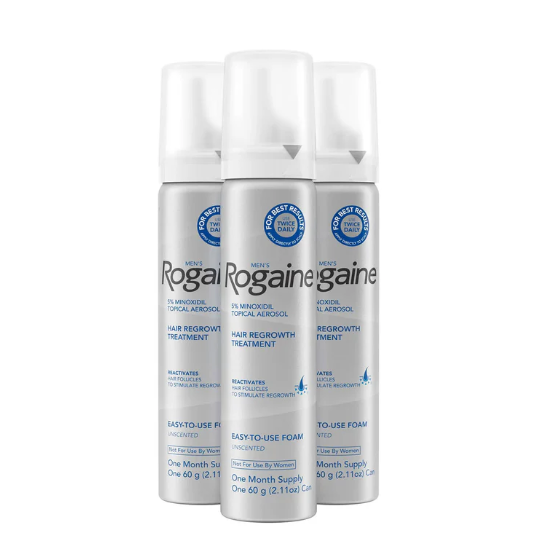
Rogaine
Rogaine is one of the most widely recognized hair loss treatments in the world. Its active ingredient, minoxidil, was originally developed as a blood pressure medication before researchers discovered it also stimulated hair growth.
Today, topical minoxidil is FDA-approved for treating androgenetic alopecia (pattern hair loss) in both men and women.

What Is Rogaine?
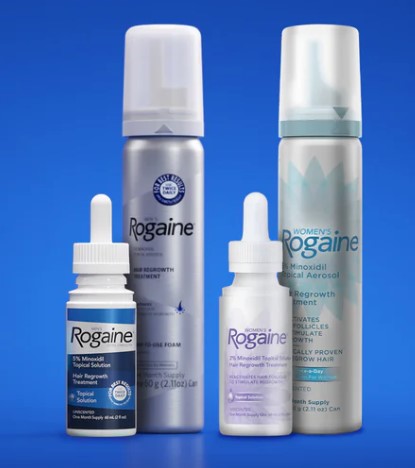
Rogaine is a topical foam or liquid form of minoxidil that can be applied directly to the scalp. Because minoxidil is a vasodilator (meaning it widens blood vessels), it is supposed to increase blood flow to the scalp.
Ideally, it would revitalize less active follicles and prolong the growth phase of your hair. Unlike cosmetic or botanical approaches, Rogaine is classified as a medication and comes in two strengths: 2% and 5%.
How Minoxidil Works
Minoxidil ideally helps:
- Increase blood flow to hair follicles
- Prolong the growth phase (anagen phase)
- Stimulate follicles that have miniaturized
- Slow progression of hereditary hair loss
Things to Consider
Even though you are not ingesting Rogaine, it is important to consider any possible problems or interactions it might have to any medications you are already taking. Especially if you take blood pressure medication, be sure to check with your dermatologist or doctor before using Rogaine.
Rogaine is also highly toxic to pets, especially cats, and can be fatal. You will want to allow the solution in your hair to fully dry (which can take up to 2 hours) before snuggling your pets.
It will grow hair wherever it comes in contact with skin, so be careful when applying it.
There is also this period of time referred to by most people as “Dread Shed”. It starts anywhere from 2 weeks and up to 4 months after initially using Rogaine, where you will likely see an uptake in shedding. Basically, Rogaine enlarges your hair follicles, which is actually a good thing. But as they grow, smaller hair will fall out to make room for new, thicker growth. Just don’t panic when this happens – it’s apparently part of the process.
Zenagen Revolve: Pros and Cons
✔ Pros
Supports scalp health naturally
Botanical ingredients help reduce inflammation and support follicle function.
Reduces shedding and improves fullness
Many users notice decreased shedding and stronger strands.
Improves overall hair quality
Hair often feels thicker, softer, and easier to style.
No drug-related side effects
A great option for those wanting a non-pharmaceutical approach.
Safe for long-term use
Works well as part of a sustainable haircare routine.
✖ Cons
Results are gradual
This is not an overnight regrowth solution.
Requires consistency
Must be used regularly to maintain benefits.
May not regrow hair in advanced baldness
Works best when follicles are still active.
Must be used indefinitely
Rogaine: Pros and Cons
✔ Pros
FDA-approved treatment
Backed by clinical research for pattern hair loss.
Can stimulate regrowth
Some users experience visible new growth.
Widely available
Easy to find in pharmacies and online.
Works for hereditary hair loss
One of the few proven treatments for androgenetic alopecia.
✖ Cons
Contraindications
It is a drug, so check with a doctor before using it, especially if you are on medication.
“Dread Shed”
The initial increase of hair shedding after starting Rogaine.
Must be used indefinitely
Once you stop using it, your hair will essentially “catch up” to where it would have naturally been if you had never started.
Not ideal for sensitive scalps
Some users report itching, dryness, flaking, or irritation, probably due to the alcohol base.
Medication commitment
Some individuals prefer avoiding long-term drug use.
Comparing Results: What Can You Expect?
With Zenagen Revolve
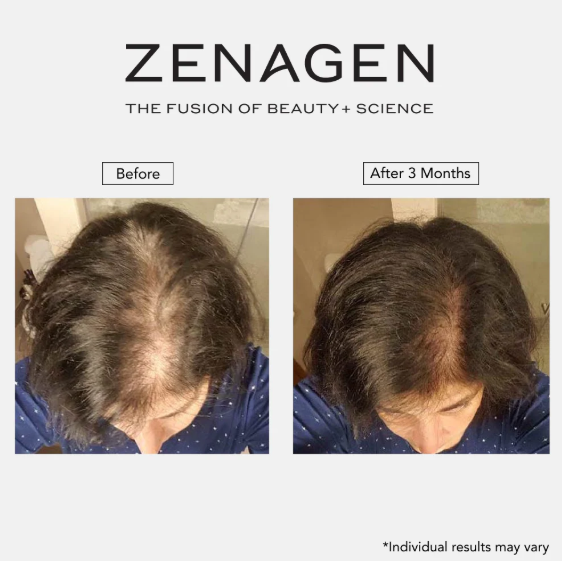
Most people notice:
- Reduced shedding within several weeks
- Improved scalp comfort
- Stronger, healthier strands
- Increased volume and fullness
- Healthier hair over time
This approach improves the environment in which hair grows rather than forcing regrowth, but only with consistency and patience.
With Rogaine
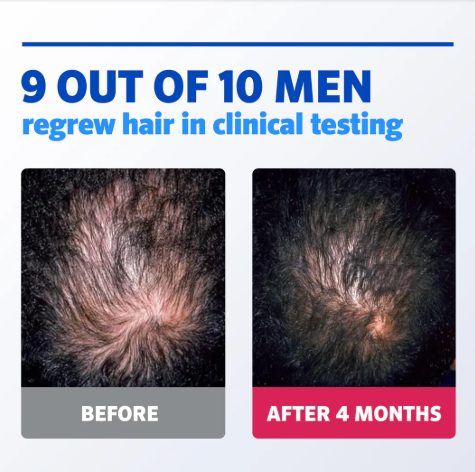
Users may experience:
- Initial shedding in the first weeks
- After initial shed ends, you will notice slowed hair loss
- Visible regrowth after 4 to 6 months
- thicker regrowth in some areas
Results vary from person to person, and consistency and thorough application is essential.
Which One Is Right for You?
Choose Zenagen Revolve if:
- You prefer a holistic, botanical approach
- Your scalp health needs improvement
- You want to reduce shedding naturally
- Your thinning is mild to moderate
- You want to avoid drug-related side effects
- You value long-term scalp wellness
Choose Rogaine if:
- You have hereditary pattern hair loss
- You want an FDA-approved treatment
- Regrowth is your primary goal
- You are comfortable using medication long-term
- You are following dermatologist guidance
Can They Be Used Together?
Yes, in some cases.
Many dermatologists recommend minoxidil alongside scalp-supportive routines. A healthy scalp environment can complement medical treatment.
If combining approaches, it’s best to consult a dermatologist to ensure proper use and to avoid allergies or irritation.
Important Things to Know Before Starting
Consistency Matters: Both approaches require regular use to see results.
Patience: Hair growth cycles take time. Expect visible changes over 3-6 months (sometimes longer).
Hair Health Is Multifactorial: Nutrition, stress, hormones, and health all influence hair growth.
Consult a Professional When Needed: If hair loss is sudden, severe, or medically related, seek medical guidance.
Final Verdict: Zenagen Revolve vs. Rogaine
In the salon, I see clients with different comfort levels and goals. Some want the most clinically proven regrowth option available. Others want to support their hair naturally and avoid medication.
Whatever you want to do, it all comes down to what aligns with your comfort level, scalp health, and long-term goals. Both of these products serve a purpose, but take different paths to get there.
For my husband and I, we preferred an option that was more natural, and something we felt super comfortable using long-term, which is why we ended up choosing Zenagen.
But healthy hair is not about quick fixes. So whatever you decide, be sure to give it a real, consistent effort before deciding if it works for you.

- The Best Hair DNA Test Kits - April 1, 2026
- Best Herbal Supplements for Hair Growth - March 23, 2026
- The Best Laser Helmets for Hair Growth - March 13, 2026